
Every guide on this topic gives you the same five bullet points. Drive for dollars. Send mail. Cold call. Network with wholesalers. Then a vague closing line about "consistency is key." This is not that article.
Below are seven methods that actually pull off-market sellers, ranked roughly by cost per qualified contact. For each one I have included what the work really looks like, what tends to go wrong, and roughly what it costs to run for ninety days. If you are starting from zero, you can probably skip to method 4.
1. Driving for dollars
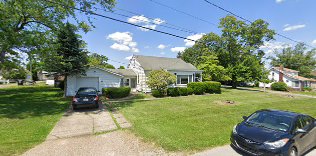
The classic. You drive a neighborhood, photograph properties that look distressed (overgrown lawn, plywood on a window, a mattress on the curb), and skip trace the owner later. It works because the data is fresh and the signal is strong. Someone who let their lawn die for three months is not happy with that house.
The honest version: it takes about three hours of driving to fill a list of forty addresses. Skip tracing those in BatchSkip or REISkip costs roughly $0.12 to $0.25 per address. Then you have to actually call them. A reasonable wholesaler closes one deal per 800 to 1200 dials, so plan accordingly.
Best used when you are new, broke, and want to learn what distressed properties actually look like in your market. Worst used as a scalable channel; the math gets ugly fast once you value your hourly time at more than $25.
2. Direct mail to absentee owners
Pull a list of properties where the owner address is different from the property address, filter for ones held more than ten years, and mail handwritten yellow letters or oversized postcards. Response rates run 0.5 percent to 2 percent for a cold first mailer. The third touch usually does the real work.
Costs are mostly printing and postage. Figure $0.65 per letter for a decent letter shop, or $0.42 for a postcard. A 5,000-piece campaign is about $3,250. If your conversion math says a deal is worth $8,000 in assignment fees, you need one deal to break even, which is achievable but not automatic.
The mistake most people make is mailing once and quitting. The compounding effect of touch three, four, five is what produces the closes.
3. Public records and county recorder data
Most US counties publish recent deeds, tax delinquencies, and code violation cases online. Some require a login, a few still ask for a paper request, and a handful charge bulk-data fees. The data is there. Pulling it cleanly is the job.
For tax delinquency: search the county treasurer site for the annual delinquent tax list. These are usually downloadable as PDFs or CSVs around September or October. Owners on these lists are signaling financial pressure tied directly to the property. The conversion rate on outreach beats almost any other source.
The catch: each county has its own field names, formats, and update schedules. Doing this in two or three counties is manageable. Doing it in twenty is a job.
4. Probate and obituary tracking
Inherited property is the most underrated source on this list. When a parent dies and leaves a house to two siblings in different cities, the path of least resistance is to sell. Heirs are rarely emotionally attached to a property they did not grow up in, and they want the money split clean.
Public probate records are filed in county probate or surrogate courts. Some counties index these online. Others require physical visits to pull. Pair these filings with obituaries from the local paper and you have a high-signal list. Most heirs are open to a respectful call about the property within six to twelve months of the filing.
I wrote a full piece on the script and the timing here: Probate leads and inherited properties.
5. Code violation and condemnation lists
Cities maintain code enforcement databases that flag properties with active violations: unsafe structure, unpermitted work, blight notices. These show up in city open-data portals or via FOIA-style records requests. Owners with active violations are paying fines and facing escalation. A cash offer often looks better than fixing the violation.
Two things to know. First, the data quality varies wildly between cities; San Antonio publishes a clean weekly CSV, while many smaller cities still maintain paper files. Second, some violations get cleared quickly, so freshness matters; a list from six months ago is mostly stale.
6. MLS expired listings
When a listing expires without selling, the seller is often frustrated, possibly priced wrong, and open to a quick close. You need MLS access (so either a license or a partnership with an agent), but the pull is straightforward: filter for expired or canceled listings in your target zip codes, then reach out the day they hit expired status.
What works here is moving fast. There are usually three or four other investors calling within the first 48 hours. Pricing your offer correctly is more important than your script.
7. Buying a curated lead feed
If you do not want to assemble all of this yourself, you can buy lead feeds from services that have already done the data work. The honest pitch for what we do at Legacy Leads: we pull off-market seller signals (inherited properties, vacant homes, out-of-state absentee owners, code violations) across 500+ US counties, enrich them with owner names, mobile phones, emails, mailing addresses, and Zestimate values, and deliver them daily to a dashboard you can sort and call from.
Pricing is per county. Counties with under ten leads per month are bundled together; counties with steady volume are priced at four dollars per average monthly lead, with a thirty dollar floor. Pick the counties you actually work and you stop paying for ones you do not.
This is not the right tool if you are testing a market and want to drive around for two weekends. It is the right tool if you have figured out which counties you work and you want the lead feed to be steady without you maintaining list pipelines.
What I would do today, starting over
If I had $1,000 and ninety days to land my first wholesale deal, here is roughly how I would spend it. Eight hours of driving for dollars in two target zip codes to learn the market. A 2,000-piece direct mail campaign to absentee owners in those zips ($1,300). The rest of the budget on phone bills and a basic CRM.
If I had a working playbook and was scaling to ten deals a month, I would stop driving and start buying. The marginal hour of my time is worth more than the marginal address from a windshield, and the curated feeds catch lead types (probate, code violations) that are tedious to assemble manually.
The pattern most successful wholesalers I have talked to follow: they pick one or two channels and stay with them for at least six months. The people who jump between methods every thirty days never get the compounding effect that makes any of this work.
Want to see what off-market leads in your county actually look like? Spin up a free account, pick a county on the map, and we will show you the live count and a sample.